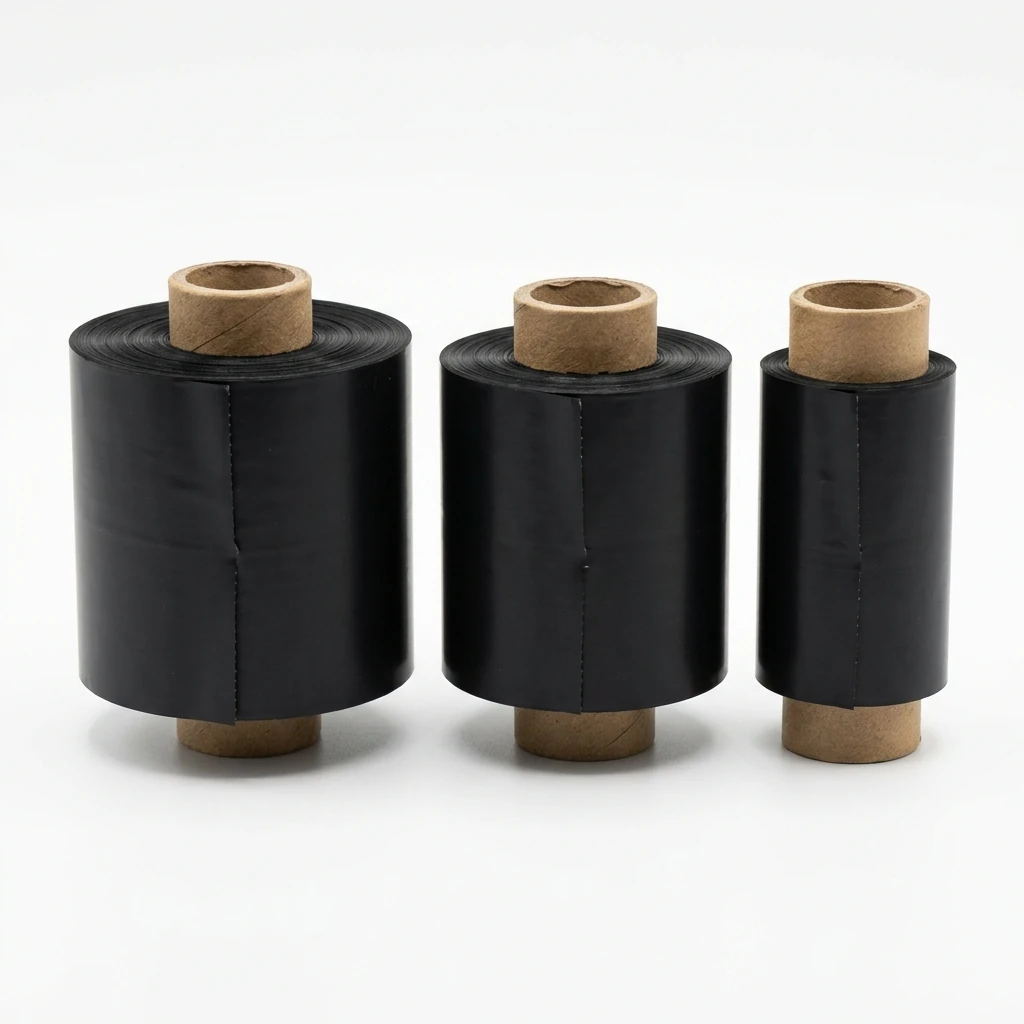
Thermal transfer printing uses a ribbon to carry colorant from a thin film to the label. Selection should begin with the printer architecture and the actual label face-stock, then move to the exposure the printed label must survive.
Compare the Three Main Families
- Wax ribbons are the usual starting point for coated and uncoated paper labels used in retail, logistics, and general identification.
- Wax-resin ribbons are useful when paper or compatible synthetic labels need more handling durability than a basic wax grade.
- Resin ribbons are evaluated for compatible synthetic labels and applications where the print must withstand demanding contact or environmental conditions.
These are selection categories, not universal performance guarantees. Adhesive, topcoat, printer condition, barcode density, and the chosen ribbon grade all affect the result.
A Repeatable Selection Method
- Record the printer model, printhead type, ribbon wind direction, width, length, and core.
- Identify the exact label material and any surface treatment.
- Define the required rub, moisture, chemical, and environmental exposure tests.
- Start with conservative printer energy and speed settings, then adjust one variable at a time.
- Approve the combination only after checking barcode quality and adhesion on production labels.
For near-edge equipment, use the dedicated near-edge ribbon series rather than assuming a flat-head grade will transfer correctly.