Choosing a resin thermal transfer ribbon is an application-engineering decision, not simply a comparison of roll prices. For industrial label converters and distributors, the selected ribbon must work as a system with the printer, printhead, label face stock, operating environment, and verification method.
YHYA supplies and converts finished thermal transfer ribbon rolls. The coating discussion below explains how resin ribbons are produced across the industry so that buyers can ask better qualification questions; it does not represent ownership of a coating plant or a particular coating formula.
How Resin Ribbons Are Made
A thermal transfer ribbon normally combines a polyester carrier film, an ink layer on the print side, and a backcoat on the side that contacts the printhead. In resin grades, the ink layer contains a high proportion of resin binders selected for adhesion and durability on compatible label surfaces.
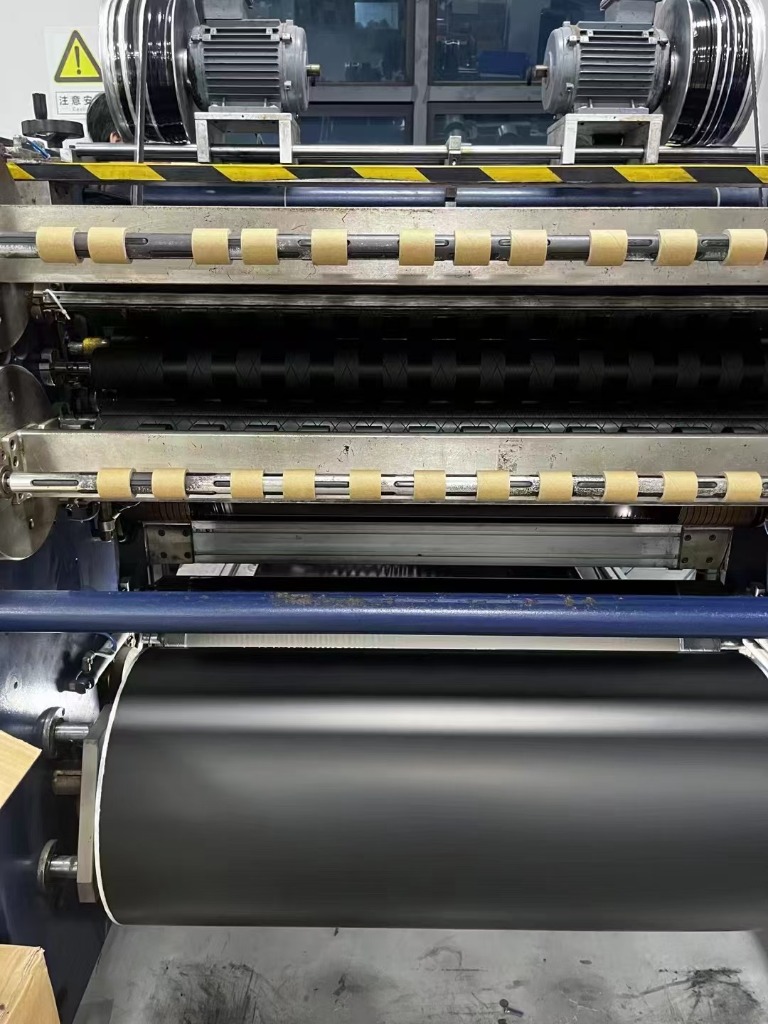
Ribbon coating plants apply these layers to wide carrier film and wind the coated material into master or jumbo rolls. Converters then slit and rewind that material into the widths, lengths, cores, winding directions, and packaging formats required by specific printers and distribution programs.
The distinction matters during sourcing. Coating consistency influences transfer behavior, while finished-roll conversion influences edge quality, winding, tracking, and printer fit. Buyers should qualify both the ribbon grade and the delivered roll configuration.
Start With an Application Profile
A useful request for quotation gives the supplier enough information to recommend and test a candidate ribbon. Record at least:
- Label face stock and surface: Identify the exact supplier and grade when possible, not only a broad term such as PET or polypropylene. Topcoats and surface treatments can change ribbon adhesion.
- Printer and printhead type: State the printer model and whether it uses flat-head or near-edge technology.
- Finished-roll configuration: Include ribbon width, length, core material and size, notch requirements, ink side, and winding direction.
- Artwork and barcode demands: Provide the smallest text, narrowest bars, rotated barcodes, and required verification grade.
- Service exposure: Describe abrasion, moisture, cleaning agents, oils, outdoor exposure, temperature cycling, or other conditions the printed label must withstand.
- Compliance context: Identify the market and application so the supplier can provide relevant declarations or test records for review.
The same ribbon can perform differently when any one of these variables changes. A sample evaluated on the production printer and production label stock is more informative than a generic compatibility statement.
Qualification Tests That Matter
Print Quality and Operating Window
Test a range of printer energy and speed settings rather than selecting a single visually acceptable print. The goal is a stable operating window that produces readable barcodes and clean small text without excessive energy.
Use a verifier when a barcode grade is contractually important. Visual inspection can identify obvious voids or spreading, but it does not replace a documented verification method.
Adhesion and Abrasion
Allow the print to condition for the period defined in the test plan, then use a repeatable tape, rub, or scratch method. Record the label material, printer settings, dwell time, test tool, number of cycles, and acceptance rule. Comparing samples without the same method can produce misleading conclusions.
Chemical and Environmental Resistance
Choose test fluids and exposure conditions from the actual application. A laboratory result for one solvent, concentration, contact time, or face stock should not be generalized to every chemical environment. Where outdoor or temperature-cycling performance matters, qualify the complete ribbon-and-label construction under the intended conditions.
Printer Fit and Tracking
Run enough labels to reveal tracking, wrinkling, telescoping, or ribbon breakage. Check that the core, notch, winding direction, ink side, width, and roll diameter suit the printer. These are conversion variables and should appear on the approved finished-roll specification.
Regulatory and Certification Review
Compliance claims require document-level verification. Ask for the document, scope, issuer, revision, and exact material covered instead of accepting a logo or broad marketing statement.
- UL or cUL marking applications: Recognition generally applies to a specified label construction, not to a ribbon in isolation. Confirm the ribbon and face-stock combination in the applicable recognition record.
- Food and pharmaceutical packaging: Define whether the printed surface has direct, indirect, or no food contact. Request declarations appropriate to the jurisdiction and intended use; do not infer food-contact suitability from a general safety statement.
- RoHS and REACH: Request current supplier declarations and confirm which supplied material they cover. These frameworks have different scopes and should not be treated as interchangeable product certifications.
- Customer-specific restricted substances: Provide the buyer’s controlled-substance list and reporting format at the start of qualification.
YHYA can coordinate available documentation for a selected grade, but the buyer remains responsible for approving the complete label construction for its regulated use.
Converting Quality: What to Inspect
Finished-roll quality can be evaluated without relying on unsupported universal tolerances. Agree on measurable acceptance criteria for the application and record the inspection method.
| Evaluation area | Evidence to request | Risk addressed |
|---|---|---|
| Slit edges | Sample rolls and an agreed visual or dimensional inspection | Edge damage, tracking errors, and debris |
| Winding | Defined roll appearance and tension checks | Telescoping, loose wraps, and wrinkles |
| Core and notch | Approved drawing or retained reference sample | Printer loading and drive compatibility |
| Ink side and winding direction | Purchase-order code plus incoming inspection | Incorrect installation or unusable stock |
| Traceability | Batch or lot identification on packaging | Faster containment and investigation |
| Packing | Approved carton and protection specification | Transit damage and roll deformation |
Backcoat and static-control performance should be confirmed through supplier data and print trials. Avoid treating a single friction or voltage number as a universal guarantee unless its method, limits, and applicability are documented for the supplied material.
Technical Data Sheet Checklist
A useful technical data sheet or product specification should identify the ribbon grade and describe the conditions under which reported properties were measured. Review:
- ribbon construction and intended printhead technology;
- recommended label materials and known limitations;
- typical printer-setting guidance, clearly distinguished from guaranteed limits;
- test methods for optical density, abrasion, chemical resistance, or other reported properties;
- storage and handling guidance;
- regulatory declarations available for the exact grade; and
- revision date and a method for tracing the document to supplied material.
If a value is critical to acceptance, place it in the agreed specification or quality agreement. A marketing page or generic data sheet should not silently become a contractual limit.
Private-Label and Finished-Roll Configuration
Distributors often need a ribbon program that is consistent across several printer models and pack formats. A converter can coordinate:
- finished-roll width and length;
- paper or plastic cores and required notches;
- inside-ink or outside-ink winding;
- leaders, trailers, labels, boxes, and cartons;
- packing quantities and shipment marks; and
- sample matching before volume production.
Approve a physical sample and a written configuration before a production order. Keep the printer model, label stock, ribbon grade, and pack specification together in the approval record.
Explore the resin ribbon series or review how to choose the right thermal transfer ribbon before requesting samples.
Supplier Evaluation Questions
Ask a prospective ribbon supplier or converter:
- Which exact ribbon grade do you recommend for our label stock, printer, and exposure conditions?
- What test data or declarations are available for that grade, and what is their scope?
- How will the finished-roll dimensions, core, notch, ink side, and winding direction be approved?
- What in-process and finished-roll checks are recorded for slitting and rewinding?
- How are supplied lots identified and handled if a print or converting issue is reported?
- Can you support a controlled trial using our production label and printer settings?
Answers should be specific enough to become part of the purchase specification.
FAQ
What causes resin ribbon prints to smudge?
Common causes include an unsuitable ribbon-and-label pairing, insufficient transfer energy, excessive print speed for the tested combination, contamination, or incorrect printhead pressure. Change one variable at a time and retain the result as part of the qualification record.
Can resin ribbons be used on direct-thermal paper?
Direct-thermal paper is designed to react to heat without a ribbon. It is not a default substrate for resin ribbon printing. If an application proposes an unusual material combination, test the exact face stock with the printer and ribbon supplier rather than relying on a broad compatibility rule.
How long can a resin ribbon be stored?
Storage life depends on the ribbon grade, packaging, and storage conditions. Follow the current supplier data sheet for the exact material and rotate stock by lot or receipt date. Requalify material if packaging is damaged or storage history is uncertain.
Contact and Sample Matching
Discuss a resin ribbon configuration and request sample matching