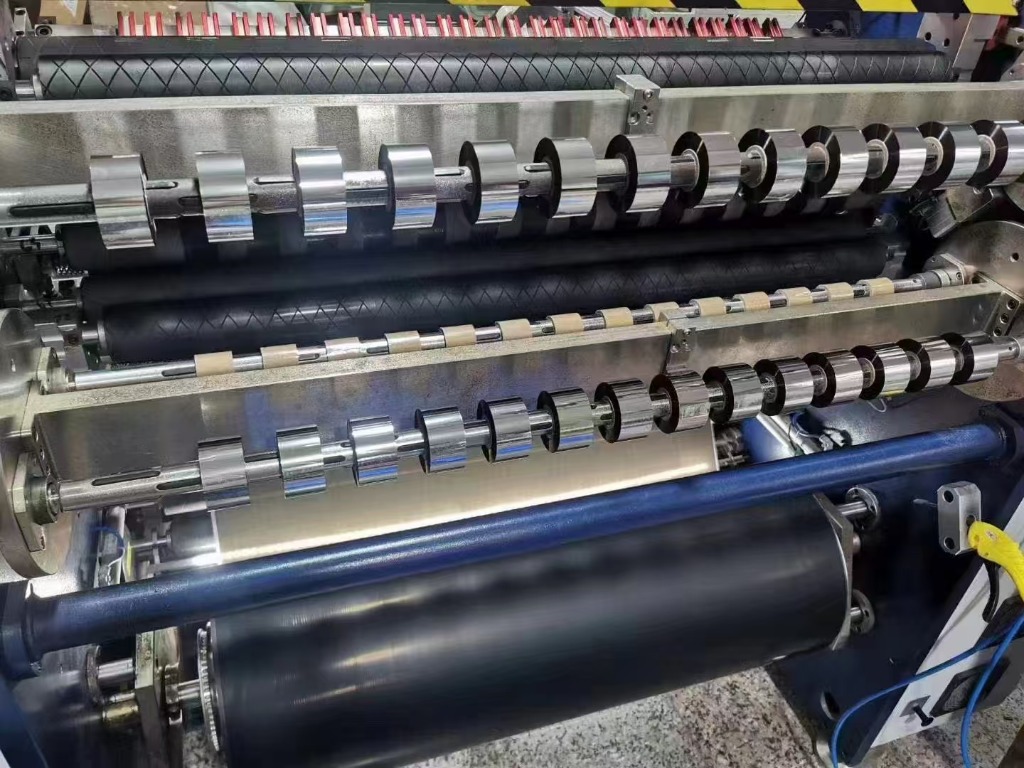
Thermal transfer ribbons are supplied as thin, multilayer webs. A converter turns qualified upstream jumbo-roll material into finished rolls by slitting, rewinding, fitting the specified core, inspecting, and packing. The questions below explain the process without treating generic industry controls as company-owned upstream manufacturing capability.
Why Does Slitting Quality Matter?
A damaged or wandering edge can disturb ribbon tracking, create wrinkles, or contribute to breaks. A sound conversion plan therefore defines the finished width, permitted variation, roll build, core, wind direction, and inspection method before production begins.
How Is Winding Controlled?
Web tension must stay appropriate as roll diameter changes. Too much tension can deform the roll; too little can produce loose layers or telescoping. Converters monitor roll shape and use a documented setup for each width, length, film construction, and core combination.
What Role Do Cleanliness and Static Play?
Dust and loose fragments can interrupt heat transfer or damage a thin web. Static can attract debris and complicate handling. Appropriate housekeeping, edge cleaning, static-control equipment, and packing controls should be selected for the conversion risk. Buyers should request the converter’s actual control plan instead of assuming a named cleanroom class.
What Should Inspection Record?
- Finished width and roll dimensions against the purchase specification
- Edge condition, roll shape, winding direction, and core fit
- Representative print performance on the intended printer and label
- Lot identification and disposition of nonconforming rolls
Product-family selection remains a separate application decision. Start with the current wax, wax-resin, resin, or near-edge series, then qualify the exact combination.