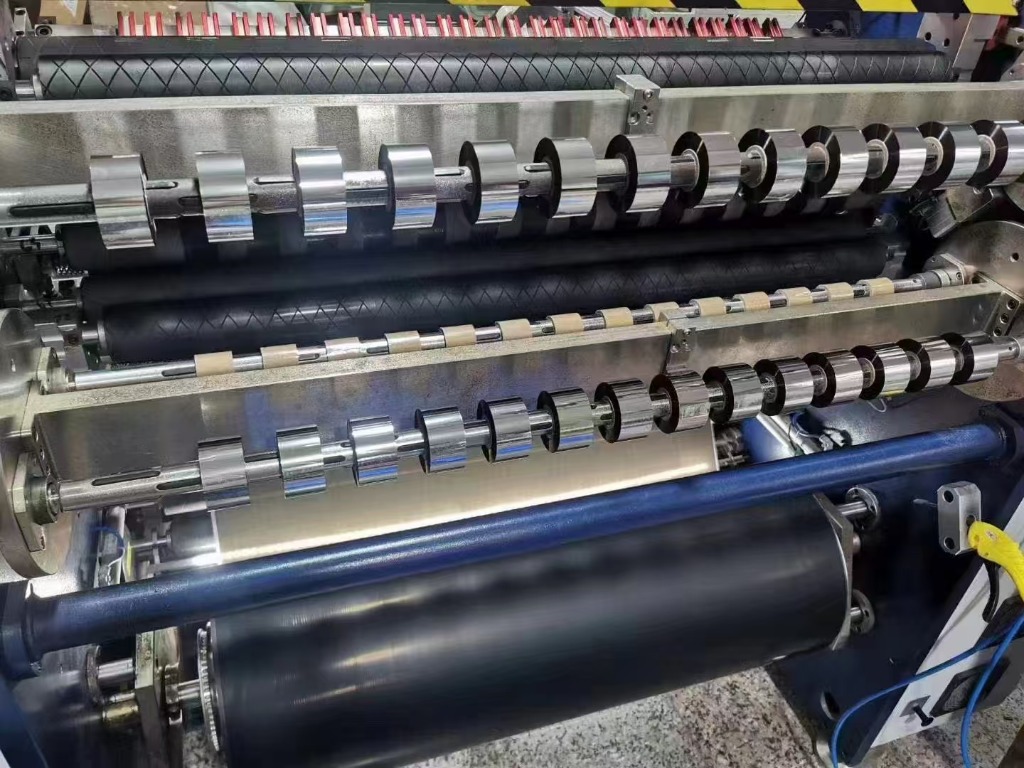
Slitting turns a wide jumbo roll into narrower rolls sized for the target printer. The purchase specification should state nominal width and an agreed acceptance limit; the converter’s inspection record should show how the finished rolls were checked.
Edge Quality
A clean, stable edge helps the ribbon track through the printer. Burrs, nicks, loose fragments, or width drift can contribute to wrinkles and breaks. Blade condition, web alignment, handling, and inspection all affect the result.
Winding Tension
The web must be wound firmly enough to hold its shape without crushing or stretching the roll. The suitable setup varies with film construction, width, length, core, and roll diameter, so a universal numerical setting is not useful procurement guidance.
Clean Handling
Dust and loose particles can interrupt heat transfer or damage the ribbon. Converters should use documented housekeeping, edge cleaning, static control, and packing measures appropriate to the job. Buyers can ask for that control plan and an inspection sample rather than assuming a particular facility classification.
Buyer Checklist
- Confirm printer, roll dimensions, core, wind direction, and ink side.
- Agree the finished-width acceptance method before ordering.
- Review edge condition and roll shape on samples.
- Run the intended label and barcode through a representative printer.
- Record approval criteria so repeat orders use the same checks.